


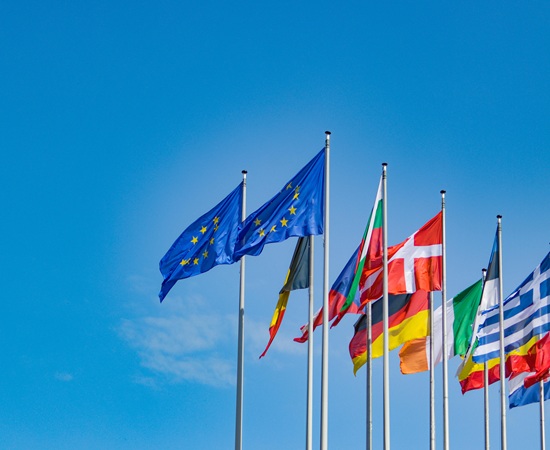
 Europe has decided that defending is no longer enough. The strategy it is reaching for has two edges, and one of them can be taken up now, at low cost, by nearly everyone already in the fight.
By Celia D. Hanley
(Founder and President of Catalina Intelligent Solutions LLC (CatalinaIQ). A former Senior Operations Officer of the Central Intelligence Agency and the Defense Intelligence Agency, with over forty years in clandestine operations, counterintelligence, and international security, she now develops cognitive security and risk mitigation programs for private-sector, government, and academic audiences.)
All statements of fact, opinion, or analysis expressed are those of the author and do not reflect the official positions or views of the U.S. Government. Nothing in the contents should be construed as asserting or implying U.S. Government authentication of information or endorsement of the author's views. This article is based entirely on open-source, unclassified information.
Copyright: @ 2026 Research Institute for European and American Studies (www.rieas.gr) Publication date: 7 September 2026
Note: The article reflects the opinion of the author and not necessarily the views of the Research Institute for European and American Studies
Something has shifted in how Europe talks about hybrid threats. For most of the past decade the language was defensive: resilience, situational awareness, protection of critical infrastructure. In the first months of 2026 that changed. The European Council on Foreign Relations published a strategy titled from shield to sword. On 16 March 2026 the Council of the European Union committed the bloc to prevent, deter, and respond to hybrid campaigns irrespective of their origin, scale and intensity, and weeks earlier it had sanctioned six individuals for information manipulation.... Read more on the Article and Read more on CatalinaIQ Profile